Google Cloud's final report on the July 2026 outage in europe-west4-a is useful because it exposes the physical chain behind a cloud service interruption. A three-millisecond voltage drop affected both utility feeds. One side transferred to diesel rotary UPS power, while the other suffered component failures. One server row then failed to transfer to the remaining feed after an overload-protection breaker tripped. Google Cloud VMware Engine, Bare Metal Solution, and Google Cloud NetApp Volumes experienced interruptions during a total incident window of 14 hours and 55 minutes.
Why it matters in production
This is the difference between duplicated components and independent failure domains. The facility had feeds A and B, backup power, automatic transfer, and multiple rows. Yet a single upstream event reached both feeds, one backup path failed, and a load-distribution discrepancy prevented one row from using the surviving side. An architecture diagram can show two lines and still hide the breaker, controller, maintenance state, or capacity assumption that connects them.
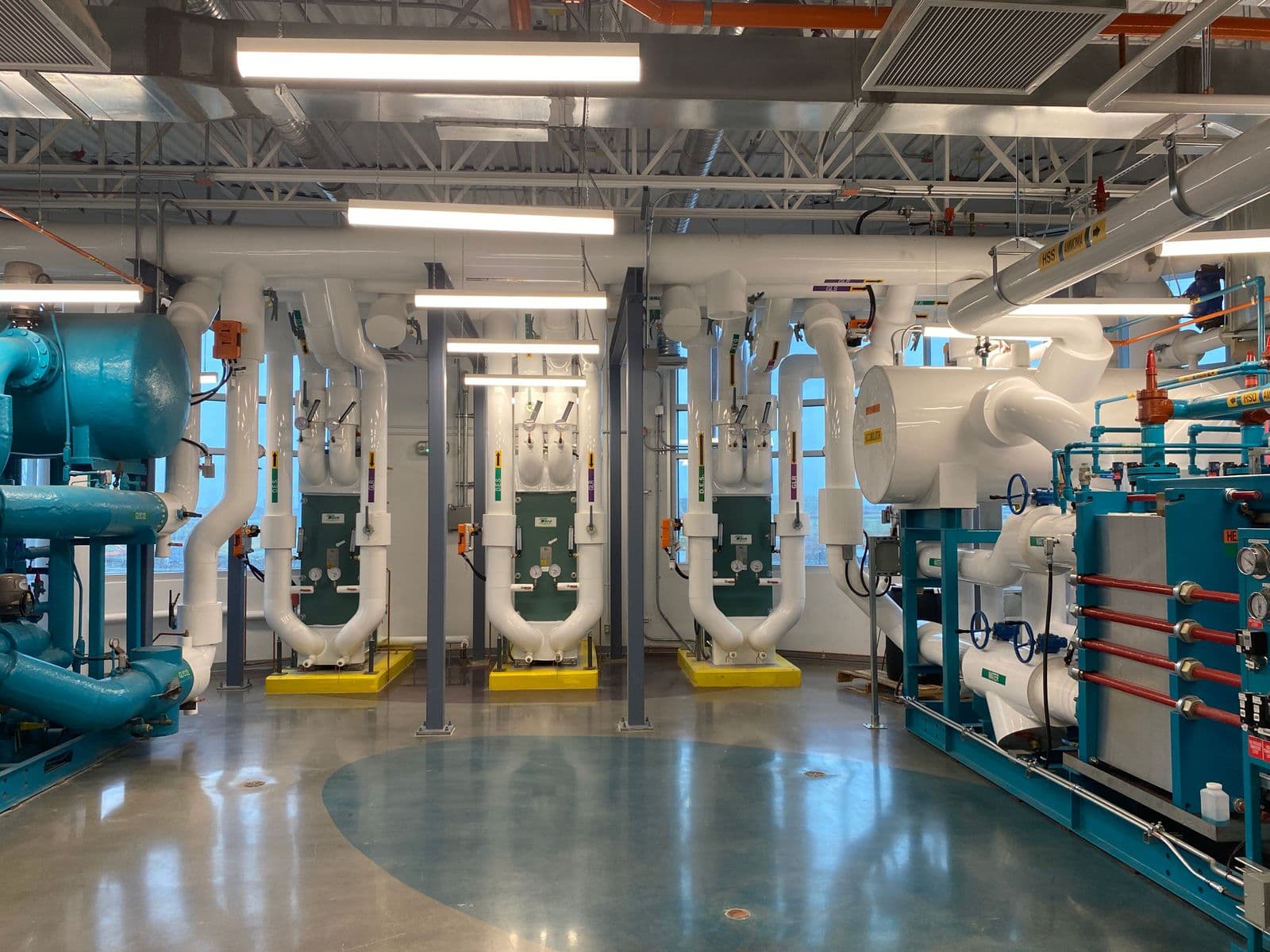
Cooling made the dependency chain wider. A chiller controller dropped offline during the same voltage transient and failed to restart the chilled-water pumps. Its redundant source was unavailable because of construction work. The data hall reached 44 degrees Celsius, forcing protective shutdowns of hosts, switches, and storage clusters. Compute, storage, networking, power, and cooling were therefore not separate incidents. They were one failure propagating through several control systems.
For customers, the lesson is not that cloud infrastructure lacks redundancy. It is that a zonal service remains a zonal dependency unless the workload has a tested path elsewhere. Google advised multi-regional customers to route traffic to an alternate site, but that option only exists when applications, data, identity, network policy, capacity, and operating authority have already been prepared outside the affected location. A second region written into a design document is not the same as a service that can actually move.
Recovery also had to happen in layers. Engineers restored cooling and power, recovered console and network infrastructure, brought storage clusters back, started servers and private clouds, and then asked customers to verify their workloads. That sequence belongs in customer runbooks as well. Recovery objectives should include platform availability, data accessibility, application startup order, identity dependencies, and evidence that the service is healthy after the provider reports mitigation.

Practical takeaway
The practical conclusion is to review cloud resilience by tracing shared physical and operational dependencies, not by counting redundant labels. For every critical zonal workload, identify what fails with the zone, where current data exists elsewhere, how traffic moves, who authorizes failover, and how the return path is tested. Redundancy becomes credible only when the alternative path survives the same initiating event and the team has proved that it can use it under pressure.